0%
Improved picking time


Founded in 1973 in Aarhus by Inger and Knud Cresten Grene, Søstrene Grene is a Danish family-owned lifestyle and homeware retailer built around a one-of-a-kind store concept — a labyrinth of aisles, classical music, and an ever-changing product range that turns every visit into a treasure hunt.
What started as a single store in Denmark now spans more than 400 locations across Europe, with ambitions to reach 500 by 2027. Under second-generation CEO Mikkel Grene, the company has grown tenfold — expanding from the Nordics into the UK, the Netherlands, Germany, France and beyond.
To support that scale, Søstrene Grene operates two distribution centres — a 28,000 m² facility in Aarhus and a new 45,000 m² hub in Venlo, the Netherlands, opened in 2026. It was in Venlo that STL implemented the Shelf-to-Person solution.
New items every week and a constantly rotating assortment made traditional fixed storage layouts inefficient and slow to adapt.
New items every week and a constantly rotating assortment made traditional fixed storage layouts inefficient and slow to adapt.
New items every week and a constantly rotating assortment made traditional fixed storage layouts inefficient and slow to adapt.
New items every week and a constantly rotating assortment made traditional fixed storage layouts inefficient and slow to adapt.
New items every week and a constantly rotating assortment made traditional fixed storage layouts inefficient and slow to adapt.
New items every week and a constantly rotating assortment made traditional fixed storage layouts inefficient and slow to adapt.

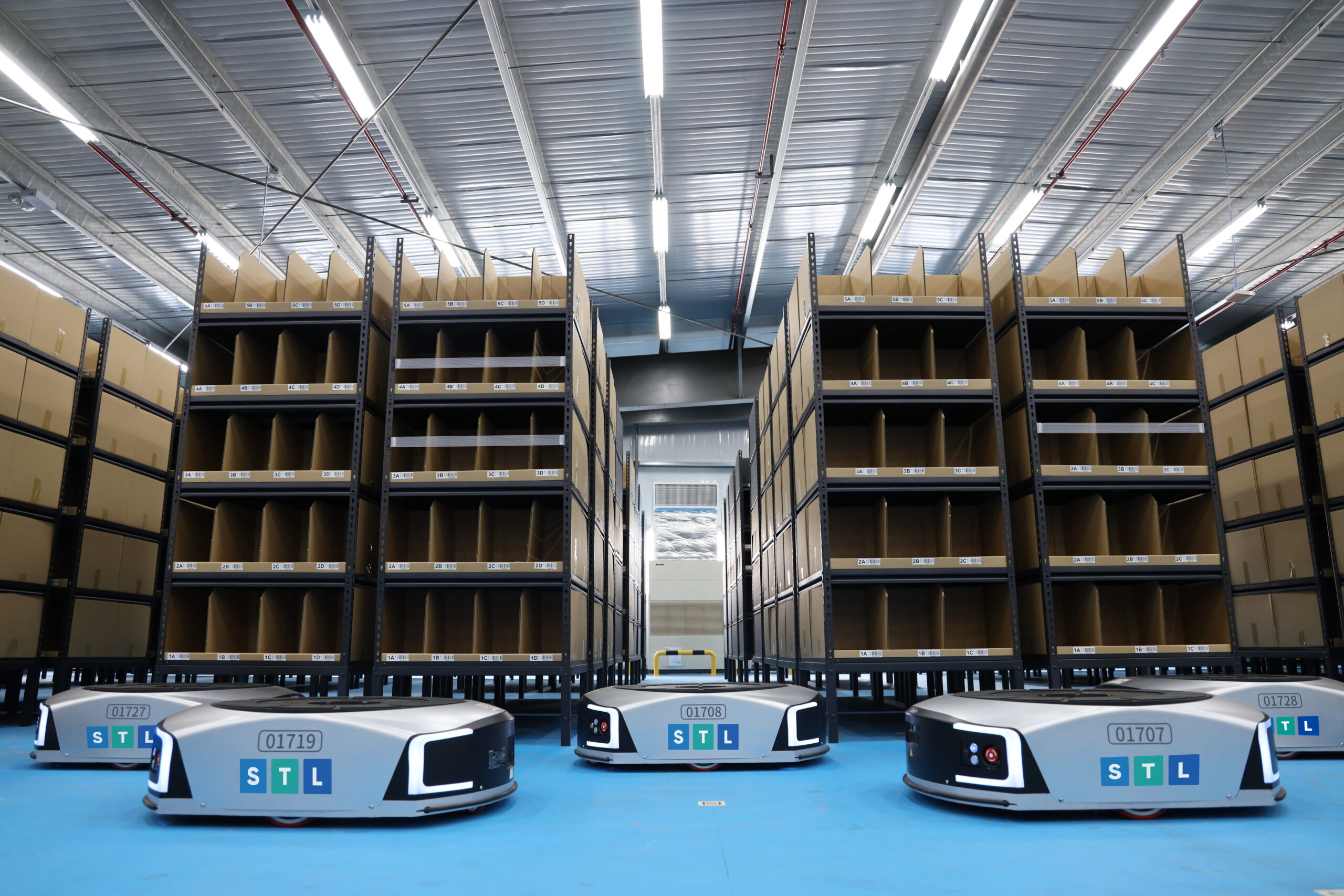
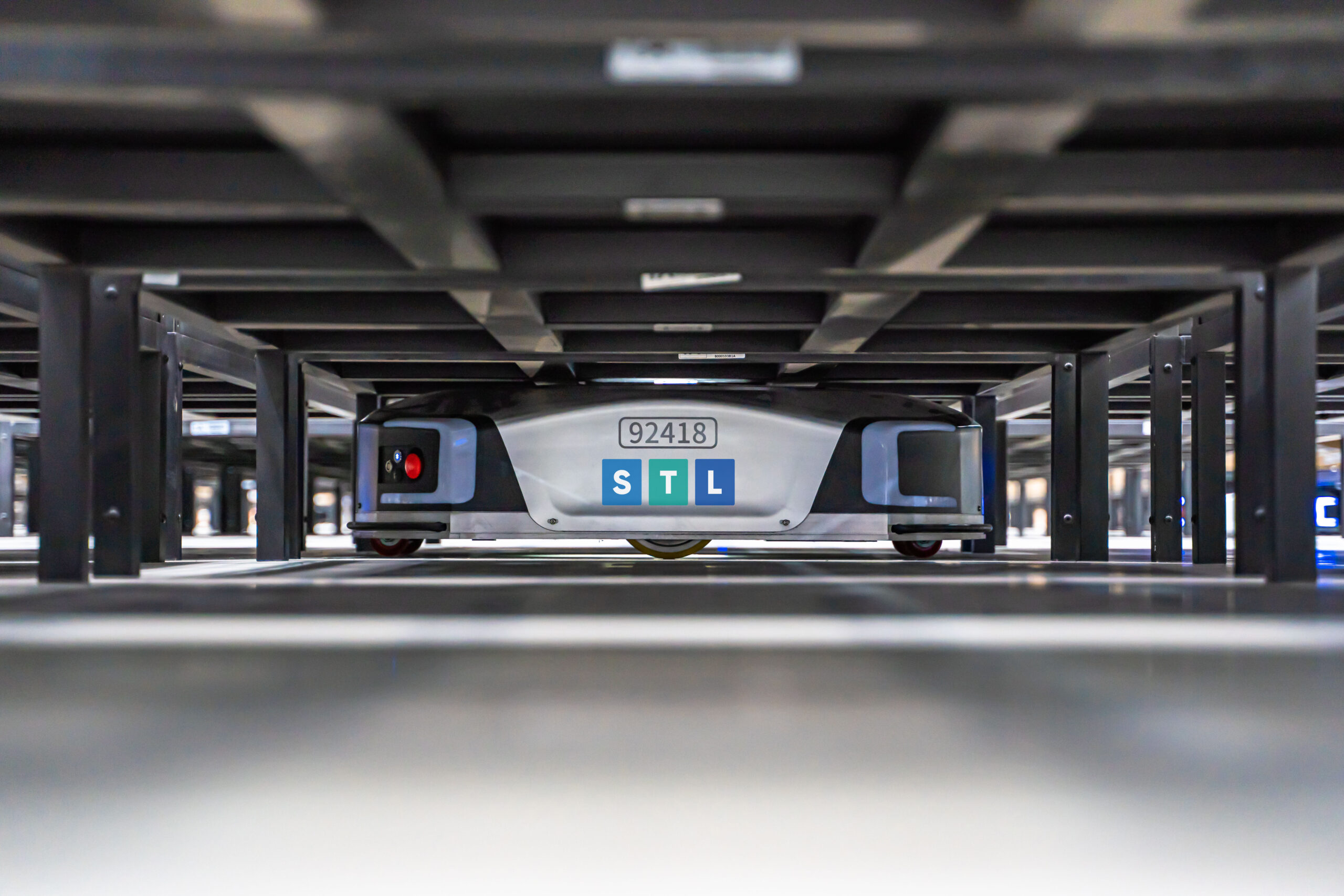
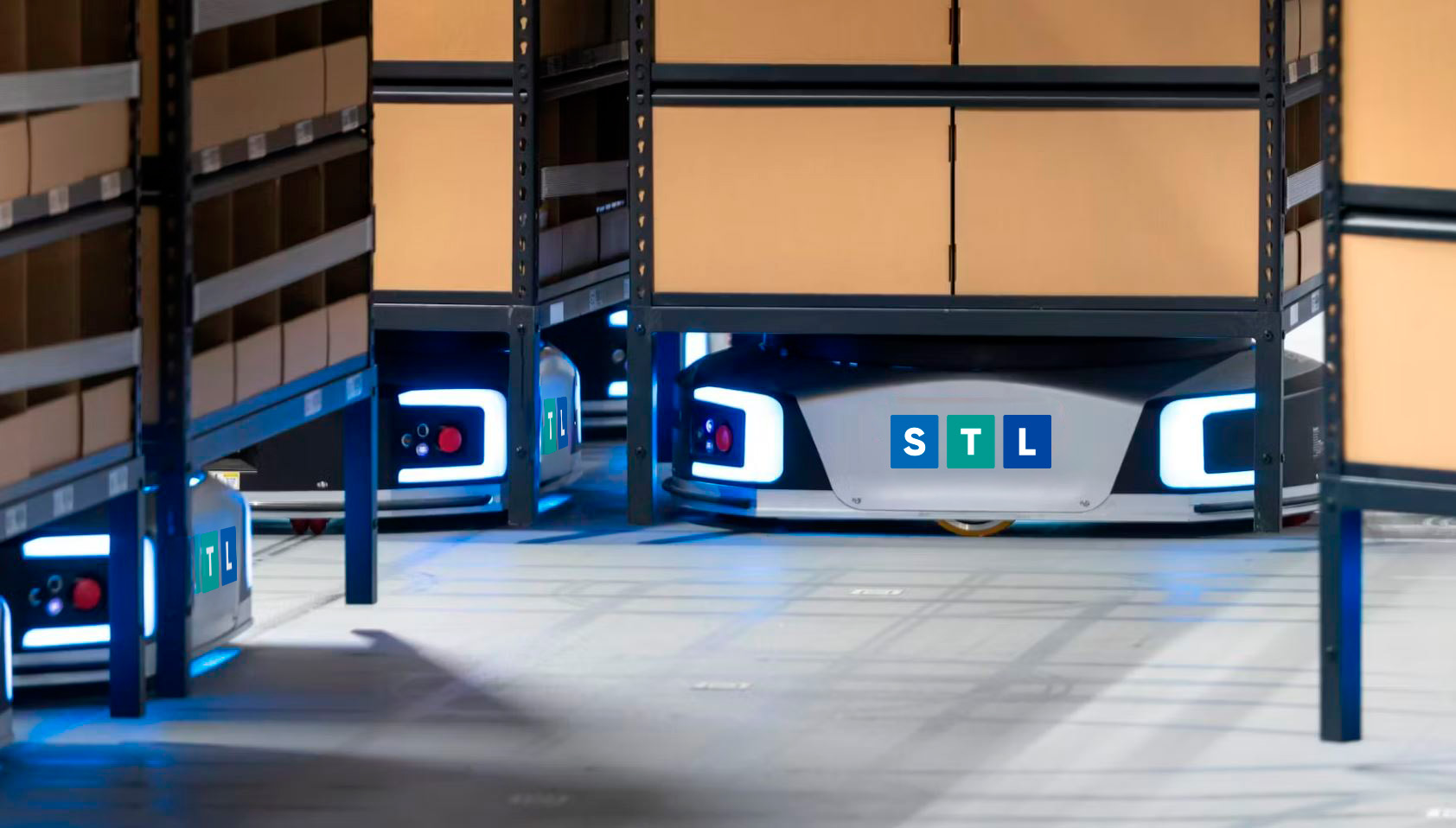
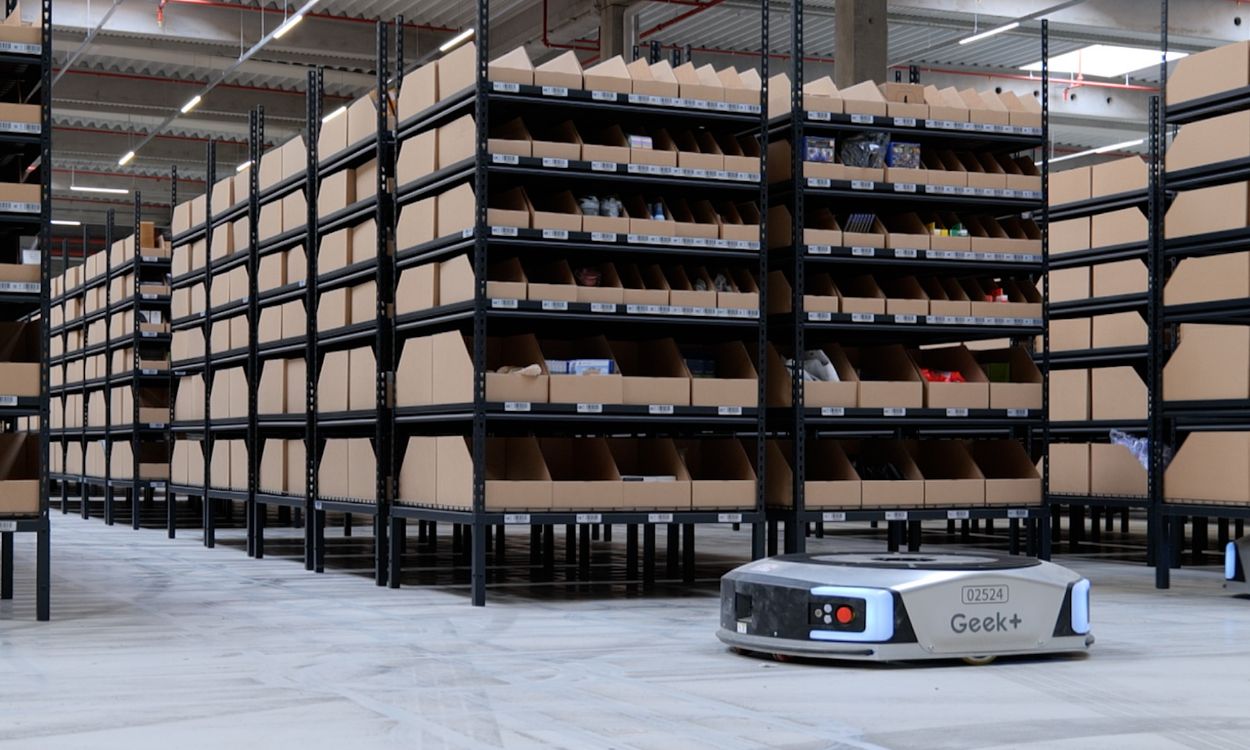
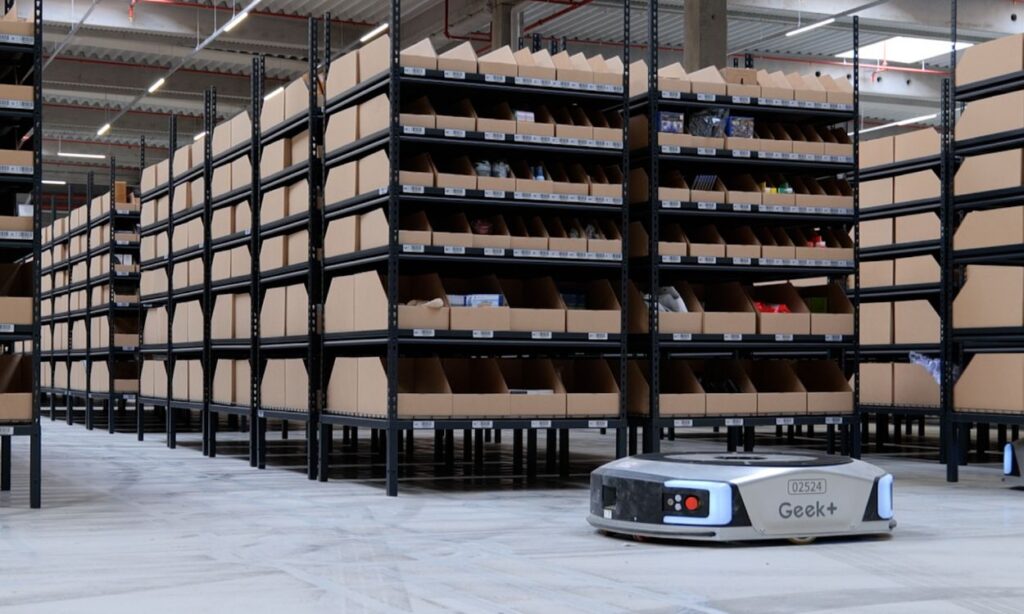
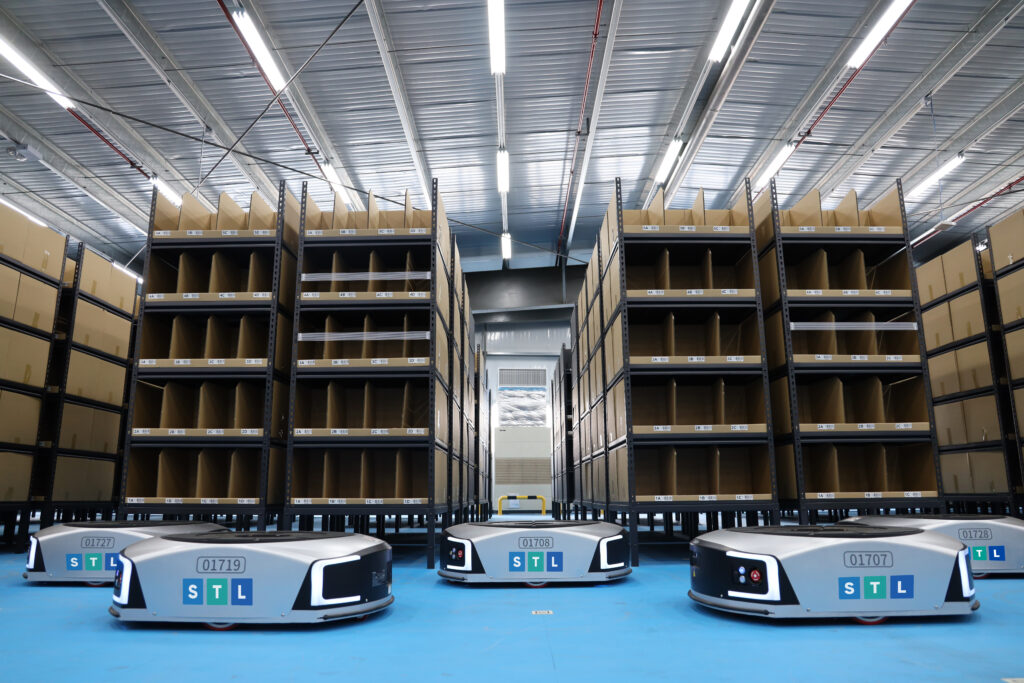
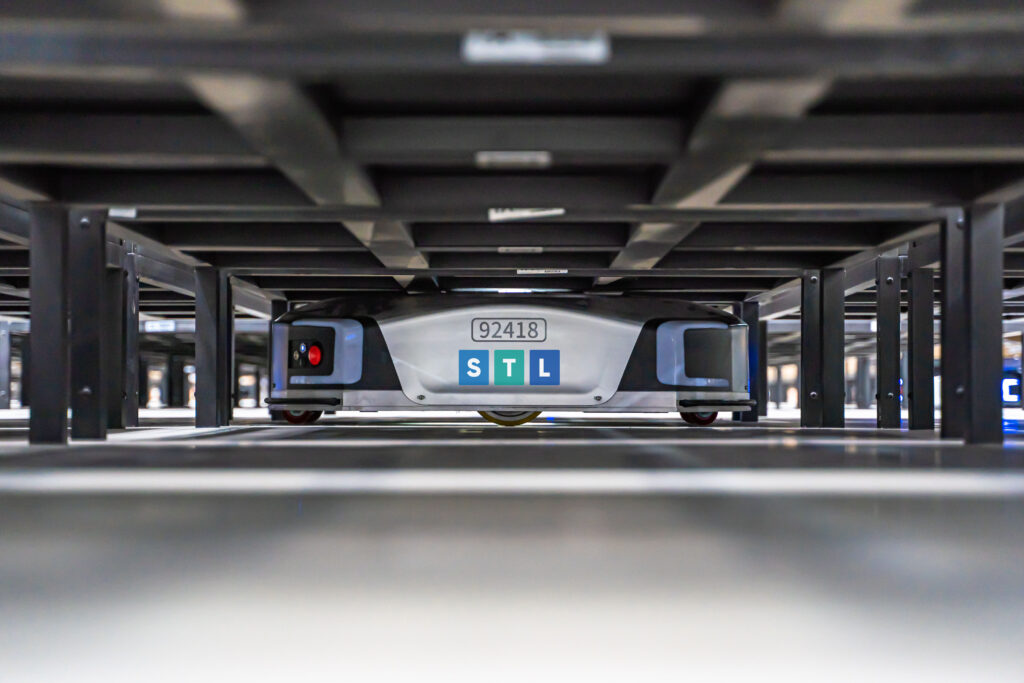
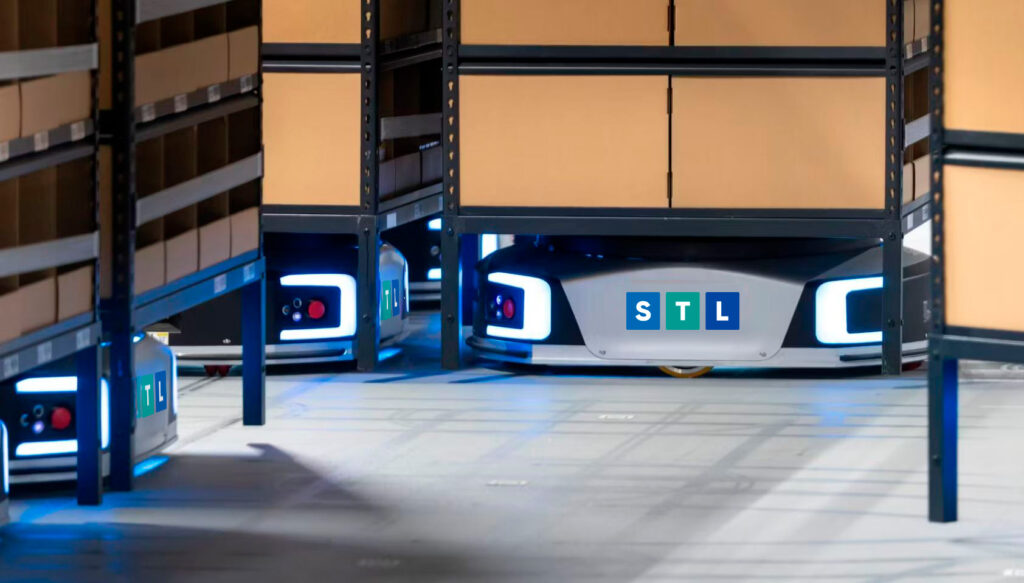
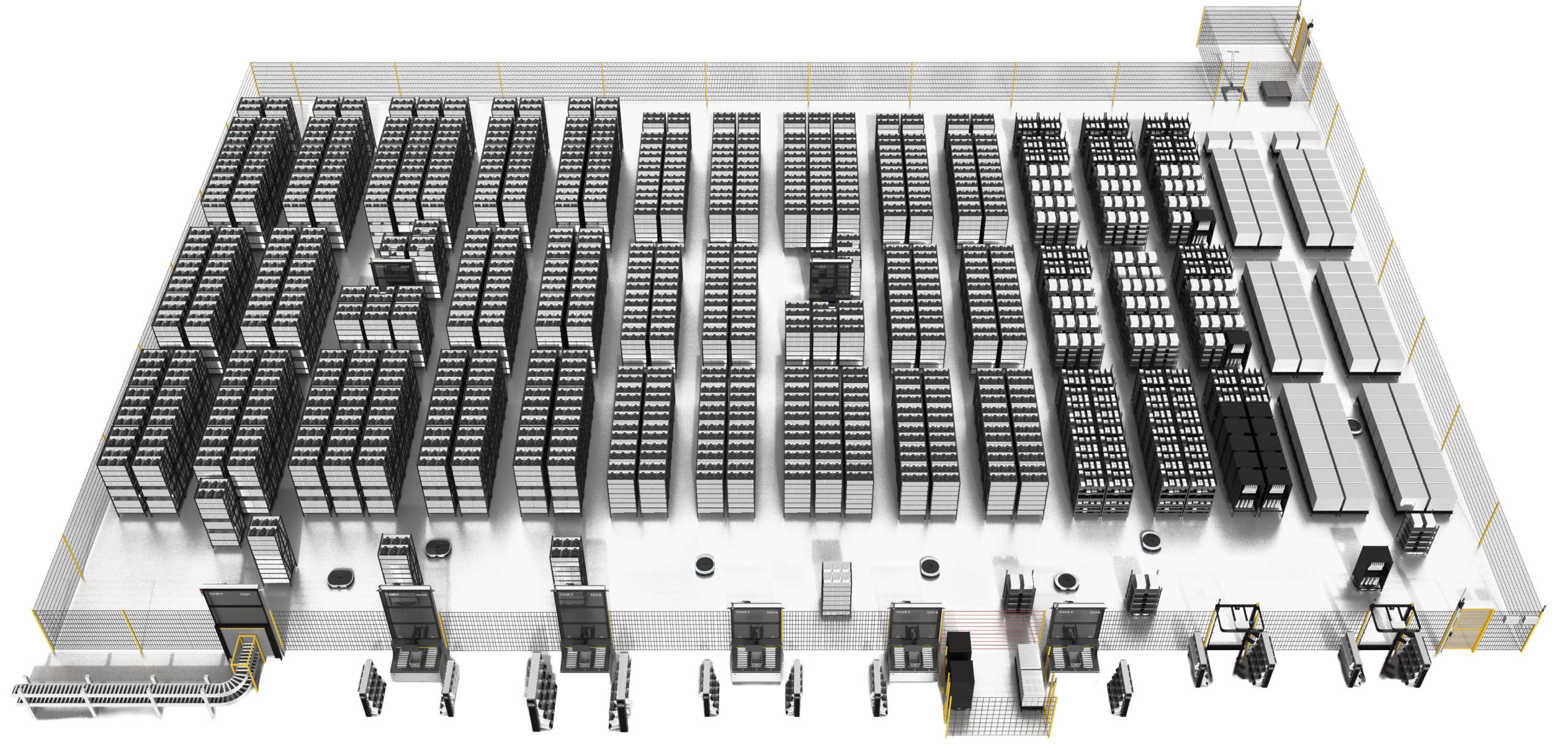
STL designed and implemented a Shelf-to-Person solution at the Venlo distribution centre, using Geek+ P1200 AMR robots to bring shelves directly to operators — eliminating walking, searching, and reaching from the picking process entirely.64 robots move autonomously across a 3,000 m² automated zone, serving 8 picking stations where operators receive totes at ergonomic height guided by pick-to-light. The WES software orchestrates the entire flow in real time — from the moment an order is received to the moment it leaves the station.
High-density storage solution for palletised goods.
Double your storage capacity without expanding the building.
Autonomous mobile robots handling order picking.

Phase 1
Testing the robot setup
Once the project is confirmed, our team conducts a thorough site survey to verify measurements, floor conditions, and access requirements. We always start with scanning the floor and the we make a precise plan for how the warehouse is done.
Phase 2
Setting up the solution
Once the project is confirmed, our team conducts a thorough site survey to verify measurements, floor conditions, and access requirements. We always start with scanning the floor and the we make a precise plan for how the warehouse is done.
Phase 3
Integration of software
Once the project is confirmed, our team conducts a thorough site survey to verify measurements, floor conditions, and access requirements. We always start with scanning the floor and the we make a precise plan for how the warehouse is done.

New items every week and a constantly rotating assortment made traditional fixed storage layouts inefficient and slow to adapt.
New items every week and a constantly rotating assortment made traditional fixed storage layouts inefficient and slow to adapt.
New items every week and a constantly rotating assortment made traditional fixed storage layouts inefficient and slow to adapt.
New items every week and a constantly rotating assortment made traditional fixed storage layouts inefficient and slow to adapt.
New items every week and a constantly rotating assortment made traditional fixed storage layouts inefficient and slow to adapt.
New items every week and a constantly rotating assortment made traditional fixed storage layouts inefficient and slow to adapt.