
Robot Management System

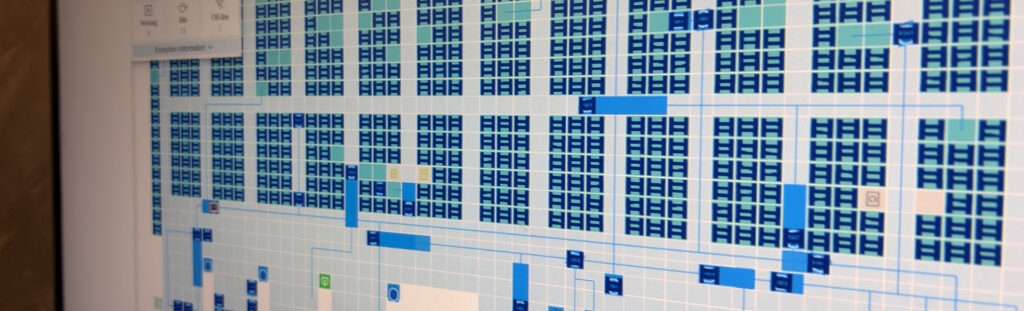
RMS is the layer of software that controls every robot in your fleet, in real time, around the clock. It decides where each robot goes, what it picks up, when it charges, and how it navigates around everything else on the floor.

What is RMS

The traffic controller for
your entire robot fleet.

RMS stands for Robot Management System. It sits between WES  which handles orders and picking tasks and the physical robots on the warehouse floor. WES tells RMS what needs to happen. RMS decides which robot does it, how it gets there, and when it needs to stop and charge.

Think of RMS as the air traffic control system for your warehouse. Every robot knows its current task, its next task, the most efficient route to take, and when to return to base. All managed automatically, all in real time, with no human intervention required.

Software Architecture

Seamless Software Integration

Our software team focuses on one thing: making sure your existing systems and the Geek+ platform communicate flawlessly. They build and manage the integration layer connecting your WMS, ERP and MES to Geek+'s RMS, WES and IOP through data, business and scheduling APIs.

Over the years, we have worked with a wide range of industries and client systems from retail and e-commerce to manufacturing, pharma and third-party logistics.Whether your business runs a standard WMS or a fully customised ERP, our team has the expertise to make the integration work.

Client Systems

WMSWarehouse Management System
ERPEnterprise Resource Planning
MESManufacturing Execution System
& many other client systems
Integration Layer
Execution Layer

AMR and Workstations

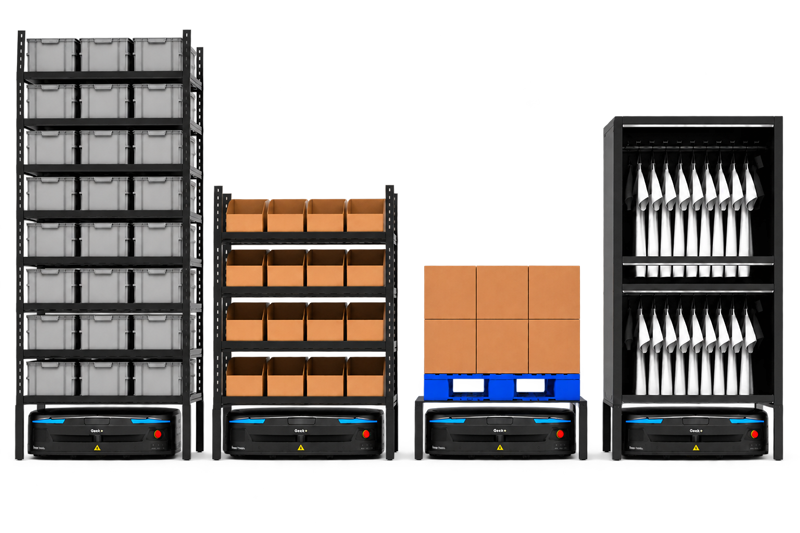
All robots controlled by One software

Geek+ robot lineup

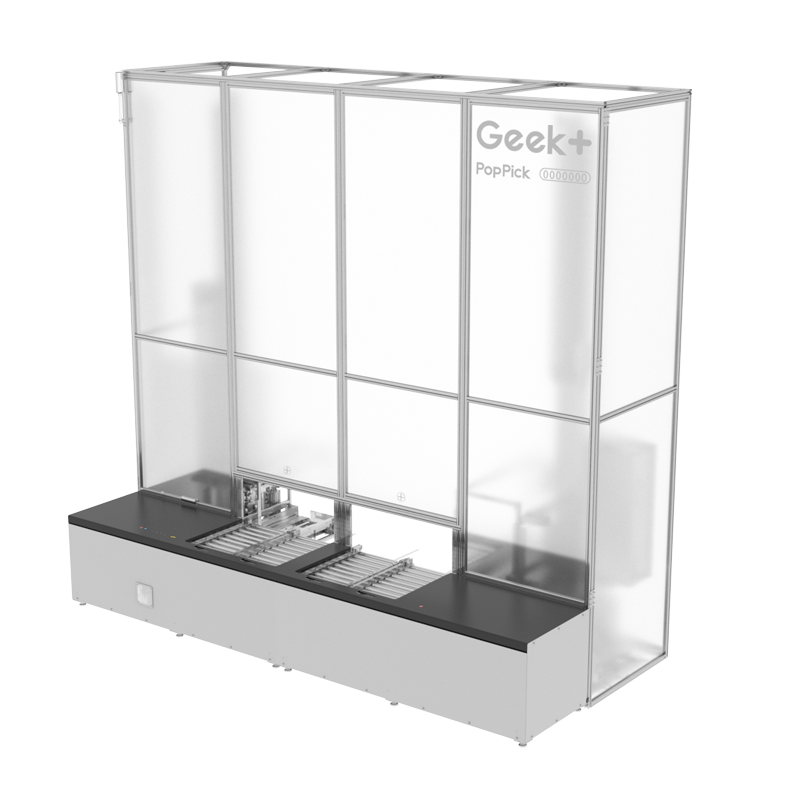
Controls Workstations, Conveyors and Inventory

Workstations, conveyors and storage

What RMS controls

One system. Every moving part.

WES doesn't control one part of your warehouse — it controls all of them. Order flow, robot movements, operator guidance, and inventory positioning are all managed in real time from a single platform. Nothing waits, nothing gets lost, and nothing moves without a reason.

  • Robot dispatching

    Every task from WES is assigned to the most appropriate robot at the right moment. RMS weighs task priority, robot location, battery level, and current workload — dispatching each job to the robot that can execute it fastest and most efficiently. Deadlock free and collision free, every time.

  • Dynamic path planning

    RMS calculates the most efficient route for every robot in real time — and recalculates instantly when something changes. Robots navigating around each other, avoiding busy zones, and adapting to floor conditions happens automatically, without any manual intervention or system downtime.

  • Intelligent charging

    RMS monitors battery levels across the entire fleet and schedules charging automatically — choosing between various charging strategies based on current workload and operational priorities. Robots charge in rotation so the fleet stays at full capacity around the clock, without any human involvement.

  • Device control

    RMS doesn't just control robots — it manages all connected automation devices across the warehouse, using different protocols to communicate with workstations, conveyor systems, and peripheral equipment. One management layer for the entire physical operation.

  • Performance optimisation

    RMS uses data-driven performance analysis to continuously improve how the fleet operates. Task priority algorithms and dynamic balancing strategies ensure every robot is always working at maximum efficiency — no idle time, no wasted movement, no bottlenecks.

  • Hybrid navigation

    RMS supports QR code and SLAM hybrid navigation — giving the robot fleet the flexibility to operate across different floor configurations and adapt to changes in the warehouse layout without requiring a complete system reconfiguration.

Do you want to know more about RMS?

RMS is a complex system and it is completely normal to have questions before you feel ready to move forward. Talk to an STL specialist. We will answer everything honestly, explain how it works in plain language, and help you understand what it would mean for your specific operation.