
Scaling doing peaks
Black Friday, campaigns, seasonal spikes - your operation needs to handle the surge without adding headcount or breaking down under pressure.

E-commerce is relentless. Volumes grow, SKUs multiply, and delivery windows shrink — while customers expect perfection every time. The warehouse sits at the centre of all of it, absorbing pressure from every direction. Here are the six challenges we see most often — and understand better than most.
Black Friday, campaigns, seasonal spikes - your operation needs to handle the surge without adding headcount or breaking down under pressure.
Same-day and next-day delivery puts pressure on every step of fulfillment. Slow picking means missed SLAs and customers who don't come back.
Errors drive returns bad reviews, and lost revenue. In e-commerce, accuracy isn't a nice-to-have - it's a direct driver of customer retention.
Labour depencdency and manual processes push up fulfillment costs. reducing cost per order without sacrificing speed is the definining operational challenge.
A system failure stops revenue immediately. Uptime and operational reliability are business-critical - not just an IT concern.
Wepshops, WMS, ERP and carriers all ned to work together seamslessly. Every gap in the chain creates delays, erros, and frustrated customers.
Manual operations have a ceiling. And the closer you get to it, the more expensive, fragile, and error-prone your warehouse becomes. Here are four signs that your warehouse have outgrown your manual processes in e-commerce.

You don't need a bigger building or a bigger team. You need a smarter system. Here is how automation can transforms the four biggest pressure points in e-commerce logistics — and what that means for your business day to day.
Always know what you have
E-commerce warehouses store hundreds of different products — small accessories, bulky homeware, totes, pallets, loose pieces. In a manual warehouse, keeping track of all of it is a constant battle. Items end up in the wrong location, stock levels drift from reality, and you only discover the problem when a customer orders something that isn’t there.
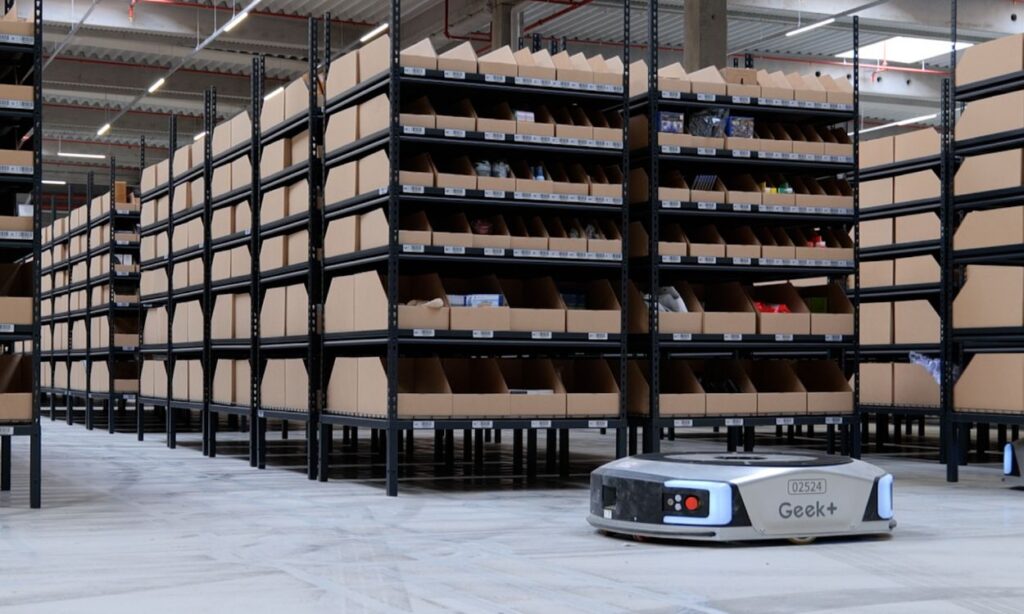
With automation, every item is tracked continuously and in real time. Every movement is logged automatically. And the system intelligently slots your fastest-moving products closest to the picking stations — so your most important items are always the easiest to reach.
Increases your throughput
In a manual warehouse, pickers walk kilometres every shift searching for items across aisles and shelves. Every step away from the picking station is time that isn’t spent picking — and every manual decision is an opportunity for an error. During peak periods, that inefficiency compounds fast.
With automation, AMR robots retrieve the right storage unit and bring it directly to a stationary operator at ergonomic height. Every pick is guided in real time — the right item, the right quantity, confirmed instantly. No walking, no searching, no reaching. Just picking. The result is up to 4x more orders processed per hour, with accuracy that makes returns the exception rather than the rule.
From dock to storage — instantly
In a manual warehouse, receiving goods is slow and error-prone. During busy periods, a backlog at the inbound station quickly creates a bottleneck that ripples through the entire operation — slowing down picking, delaying orders, and creating stock discrepancies.
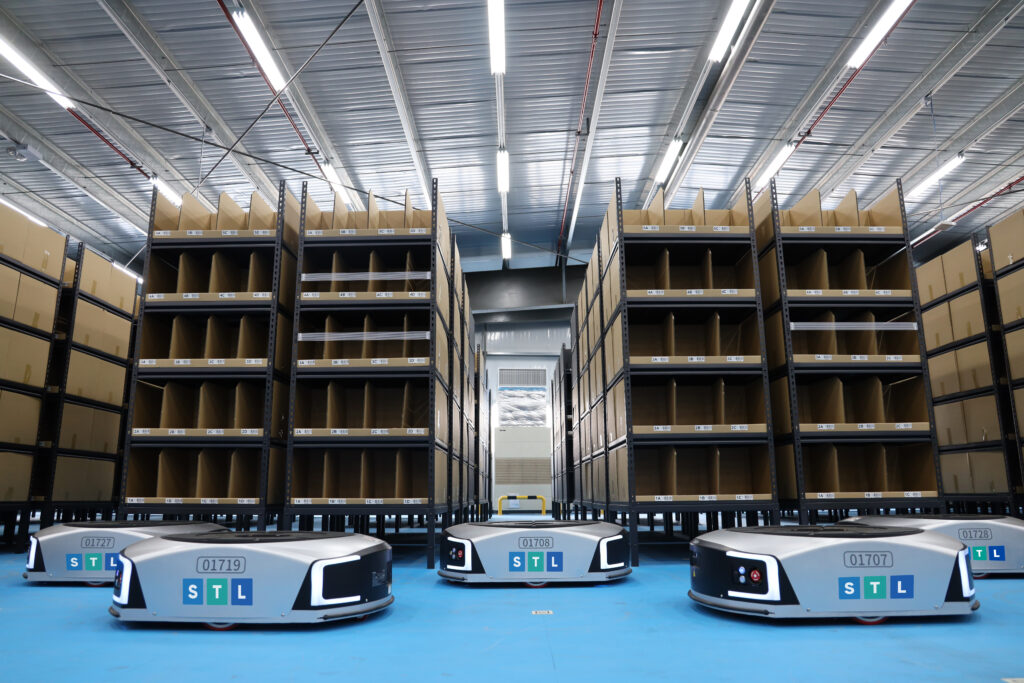
With automation, every tote is scanned and registered the moment it arrives. The system assigns it a storage location based on order forecasts and SKU velocity, and robots transport it there immediately. Your fastest-moving products are always positioned closest to the picking stations, so the work you do at inbound directly improves the speed of every order that follows. No manual data entry, no delays, no discrepancies between physical stock and what the system shows.
Every order out — fast and accurate
In a manual warehouse, the outbound process depends on operators making the right decisions under time pressure — confirming picks, checking quantities, applying labels, sorting by carrier. Errors at this stage are costly.
With automation, operators work at an intelligent workstation where every step is guided in real time. The system tells them exactly what to confirm, how to pack it, and where it goes — eliminating decision fatigue and manual errors. Orders are automatically prioritised by delivery deadline, so same-day shipments always make their cut-off. More orders processed per shift, fewer errors leaving the building, and a dispatch operation that scales with demand without scaling the team.
Returns under control
In e-commerce, returns are inevitable. In a manual warehouse, they’re also a constant disruption — arriving unpredictably, requiring individual handling, and pulling staff away from outbound flow.
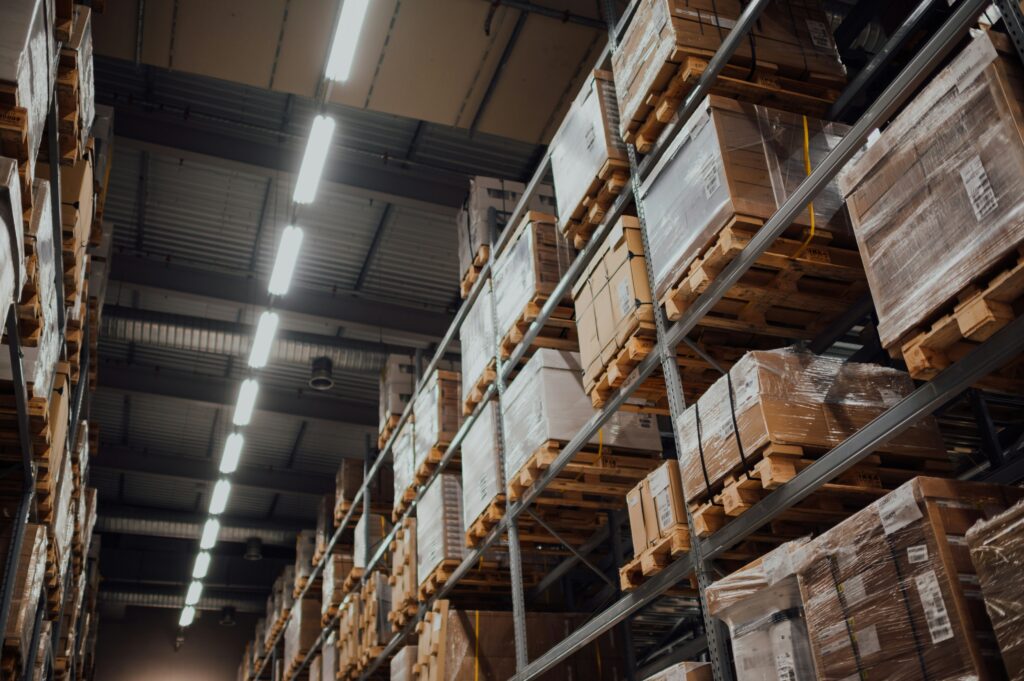
With automation, every returned item is scanned and assessed the moment it arrives. Items that can be restocked are back in the system immediately — correctly located, correctly counted, and ready to be picked again. Items that need inspection are flagged and routed automatically. Your return volumes stop being a bottleneck and start being a process you control — without adding headcount or disrupting the outbound flow running alongside it.
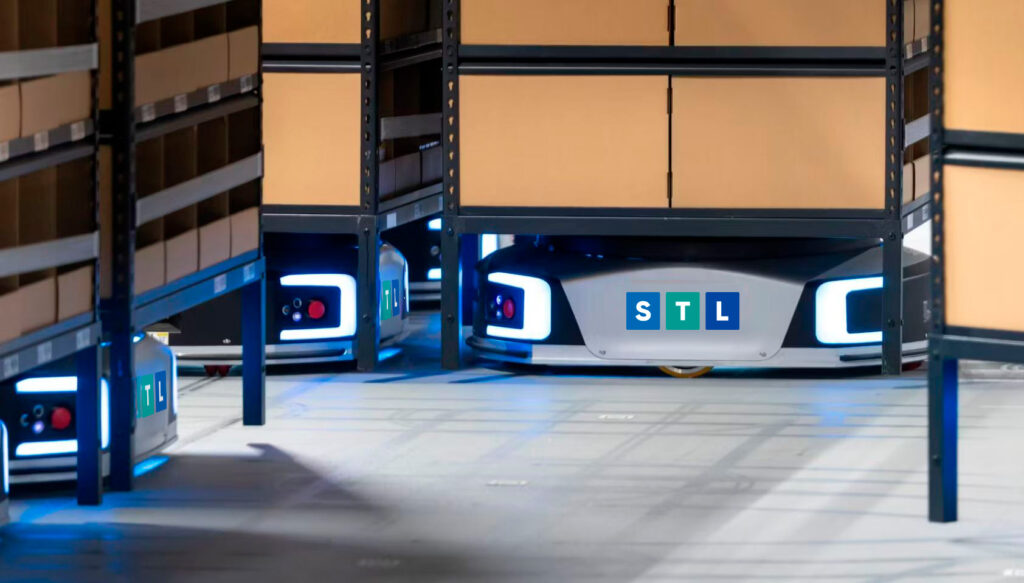
Automating your warehouse doesn't mean automating one process — it means connecting all of them to one working solution.
Our solutions are modular by design. Expand the robot fleet, add picking stations, or extend storage capacity as your volumes increase.
Mixed SKUs, multiple formats, constantly changing assortments — one system handles it all without reconfiguration in all our solutions.
Most e-commerce customers see full ROI within 1–3 years — faster than they expected, with lower total cost than alternatives.
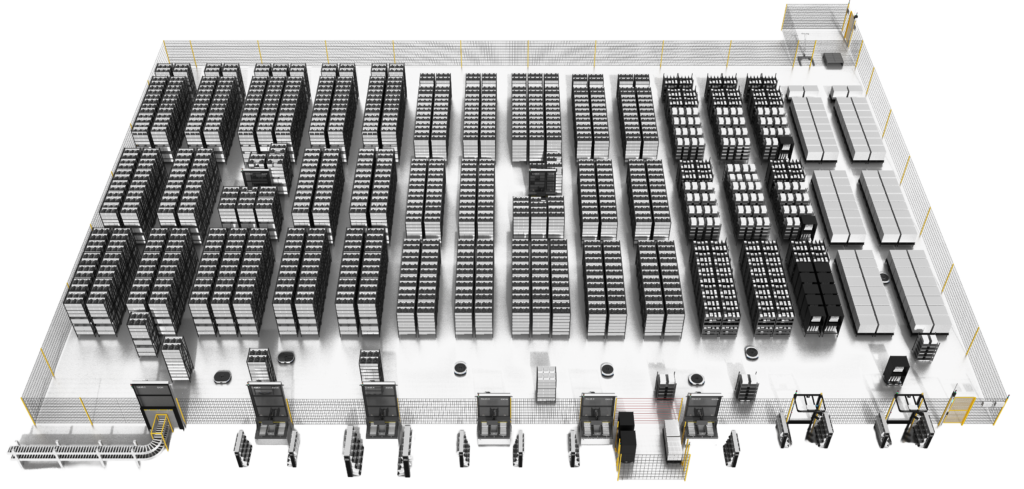
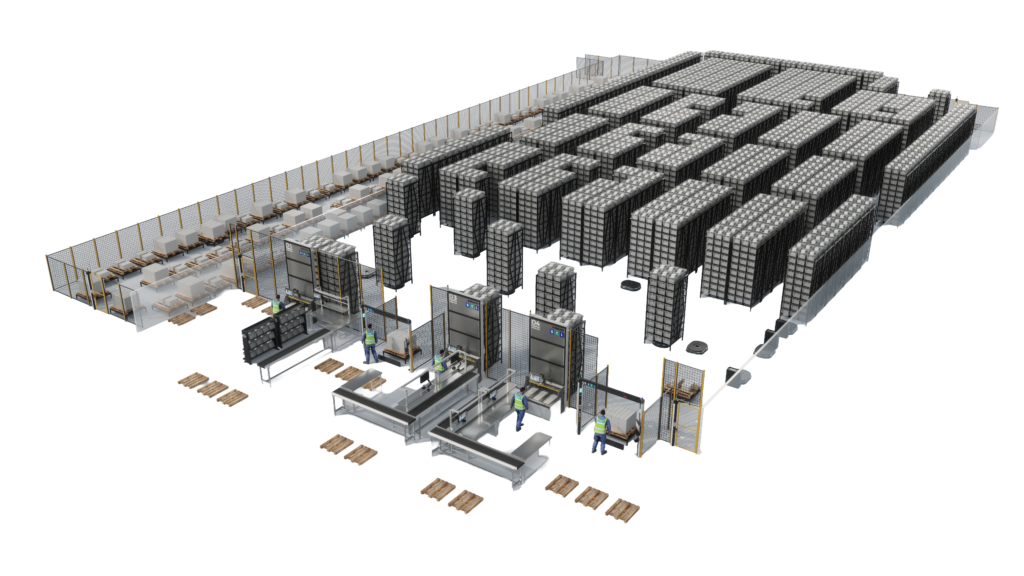
Innovative integration of storage and picking, revolutionizing traditional warehouse automation。
Read more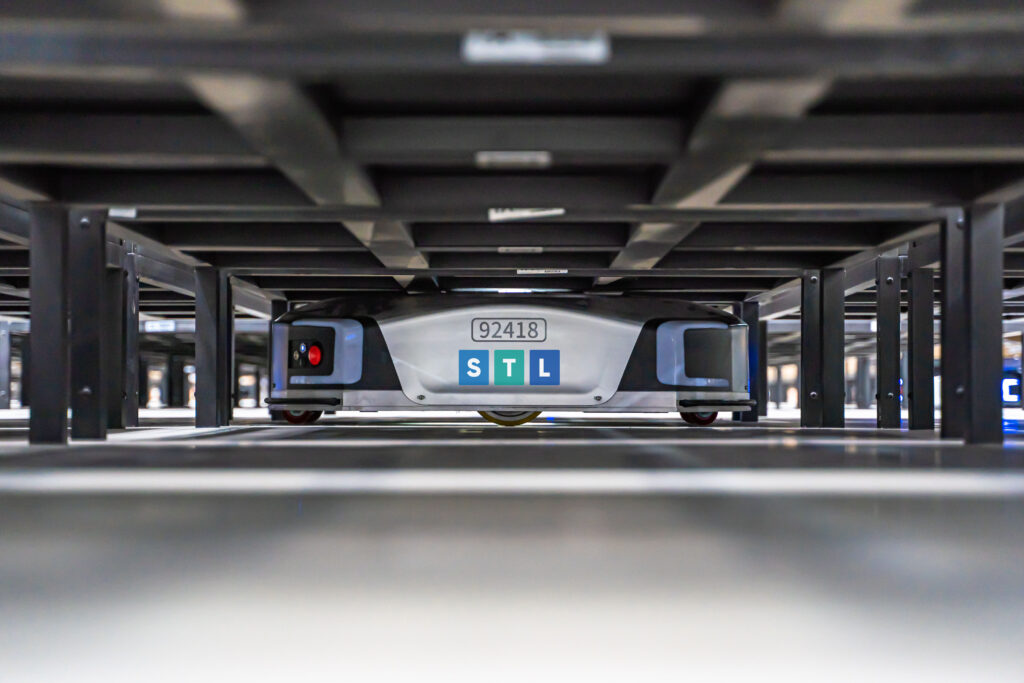
As your integration partner, STL takes full responsibility for everything — from initial design and project management to installation, software setup, and long-term service. No handoffs between suppliers, no gaps in accountability. Just one partner who sees the whole project through from start to finish.
We start by understanding your operation — your volumes, your products, your space, and your ambitions. Then we design a solution that fits your warehouse, not a standard template.
From kickoff to go-live, STL manages the entire implementation. One dedicated project manager, one clear timeline, and full accountability for every step along the way.
Our team handles the complete technical installation — hardware, software, and system integration. We connect everything to your existing WMS or ERP via open API, with no complex middleware required.
Once your solution is live, we stay. Service contracts, preventive maintenance, system updates, and a direct line to our support team — so your operation keeps running at full performance long after go-live.
Black Friday. Christmas. Campaign launches. Every one of them is an opportunity to prove your operation — or expose its limits. The warehouses that handle peak season without breaking aren't just lucky. They prepared. The best time to start was last year. The second best time is now.
info@stl.dk
+45 54 54 43 23